Two sides and a recipe
Recipe: two horizontal rows of 3 cobblestone on top and bottom; middle row - redstone, redstone, Nether quartz. Total 6 cobblestone, 2 redstone, 1 quartz. Reference: Minecraft: observer.
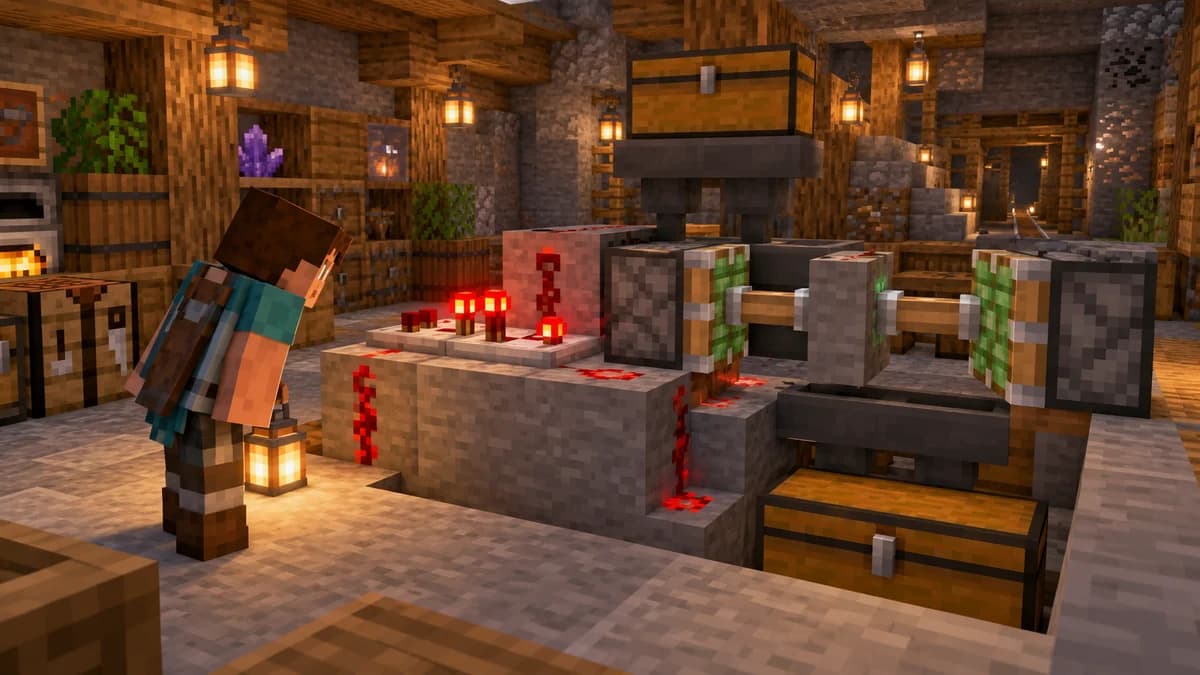
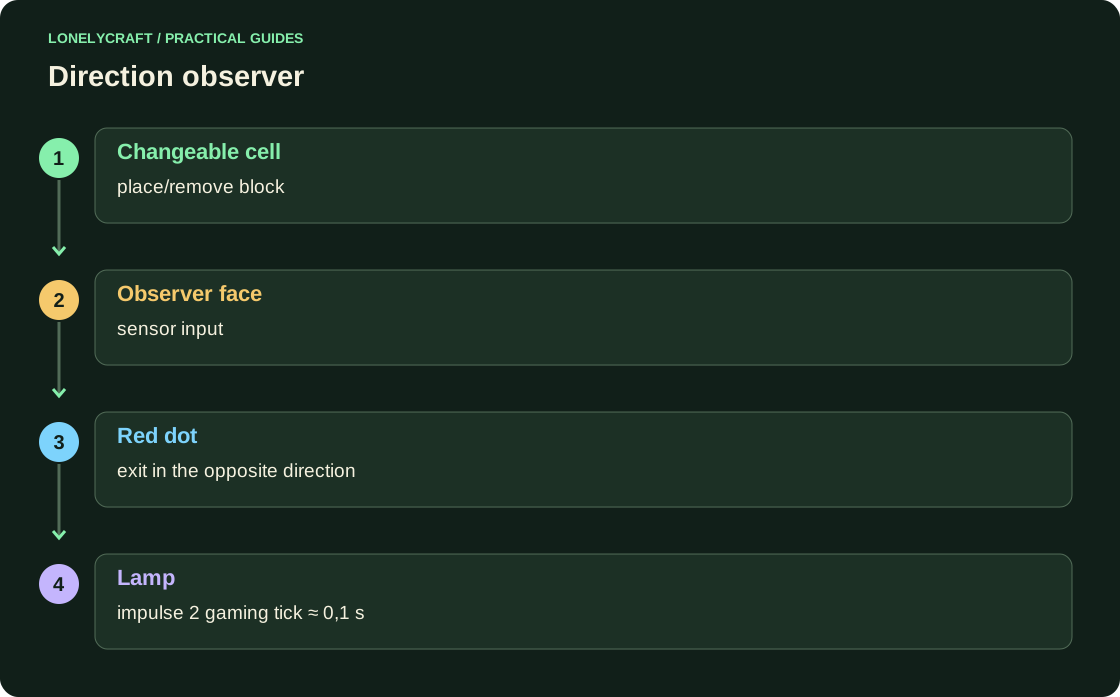
Place the observer so that its face is looking at the empty test square. Connect the lamp to the red output through the dust or repeater. Don't just rely on the top arrow from the texture pack: find the face and the red dot.
One cell - two changes
Place a regular block in front of your face: the lamp should flash briefly. Wait and remove the block: you will receive a second impulse. The unit left in front of the sensor is not required to keep the lamp on.
The usual output is 2 game tick, that is 1 redstone tick, about 0,1 seconds during normal game progress. A repeater with a longer delay helps to see a short event, but does not turn it into permanent memory.
A working module with observer is disassembled here: A sugar cane farm: from a manual row to one automatic module.
Plant growth and feedback
In the sugar cane module, observe the cell of the future third segment, and place the piston at the second: after the impact, the lower segment should remain. Manual segment installation checks the sensor and piston; check natural growth separately.
If two observers react to each other or the piston changes the observed cell, it may fire again. Break the output, check the single event and return the wiring to the nodes. The set of detected updates varies between Java/Bedrock; Don't tolerate an unusual trigger without trying it out.
Direction, gain and delays are discussed separately: Repeaters: direction, delay and long signal lines.