Choose a design built for Java
This guide explains troubleshooting; it does not replace a precise build plan. Use the author’s Java design and check its target release. Bedrock uses different village mechanics: moving the same three villagers will not make this design work there. Reference: Java farm designer.
Before moving the mobs, build enclosed cells, sleeping space and a way to block their view of the threat. A profession is not required for this Java panic-based design. Check that every villager can sleep and reacts to the threat.
Let every villager sleep
Block the view of the zombie in the evening and make sure all three villagers get into bed. Continuous panic can prevent the sleep condition from being renewed, stopping the farm later. Once they have slept, restore the line of sight specified by the design.
Keep the zombie alive, protected from morning sunlight and unable to hit the villagers. Use the designer’s method of preventing despawning, such as a name tag. Do not arbitrarily change a boat, roof or extra block that controls the line of sight.
To get new villagers, start with the manual site: Breeding villagers and finding why it fails.
A golem spawned: check the full collection path
If a golem spawns outside the platform, fix nearby spawnable surfaces instead of adding villagers. Roofs, overhangs and ground can provide unintended spawning positions.
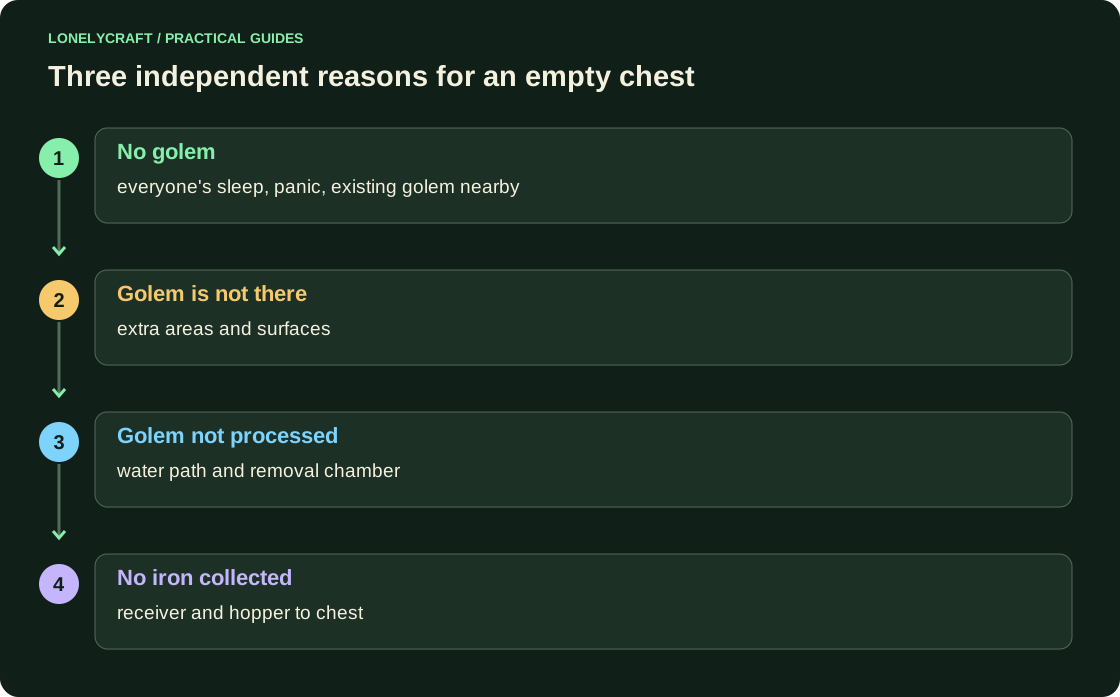
If a golem is standing nearby and no new ones appear, finish moving it out of the working area first. Then check the processing chamber and item collection: 32 test items thrown into its intake should reach the chest. An empty chest while a golem is alive and an empty chest because no golem spawned are different problems.
Before copying the module, perform counting tests: Testing a farm before building it at scale.