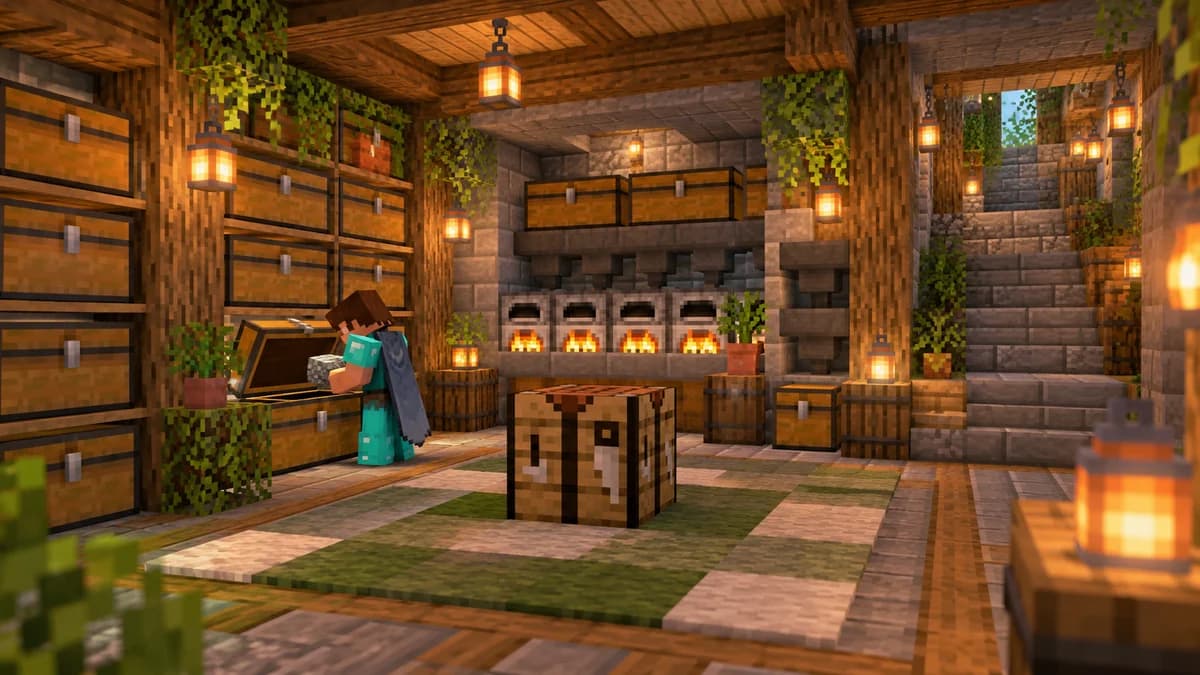
Assign an address before filling
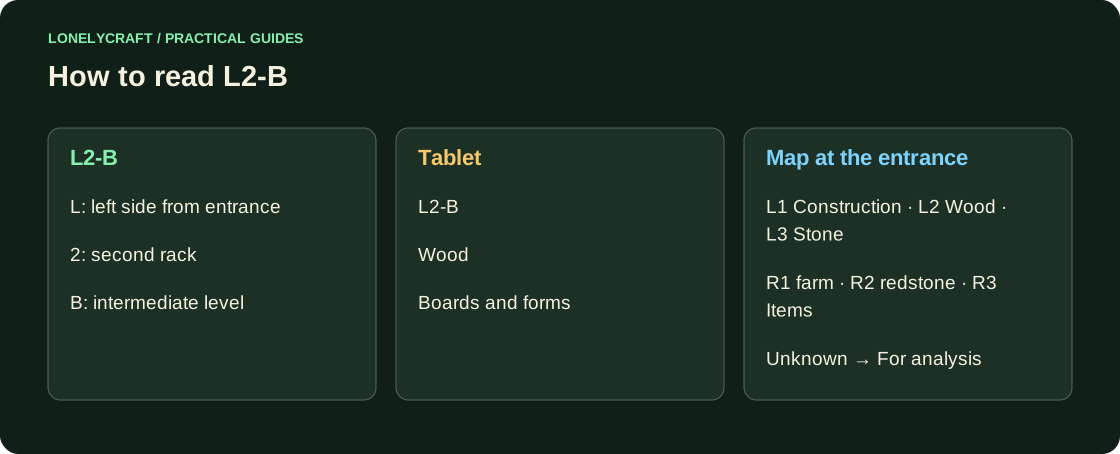
Count the racks from the entrance: on the left L1,L2,L3, on the right R1,R2,R3. A - lower, B - middle, C - upper double chest. For example, L2-B means the middle tier of the second left pillar. Prepare 18 signs, an entrance card and a separate label “For review”.
Leave three short lines on the sign: L2-B, Древесина, Доски и формы. A frame with a sample is optional: the word helps to distinguish between externally similar or currently missing resources.
Write down one category card
Initial version: L1 - common building materials, L2 - wood, L3 - mass stone; R1 - food and farm, R2 - redstone, R3 - equipment and rarities. Divide the three tiers according to real needs, do not create 18 empty categories for the sake of symmetry.
The controversial resource gets one main place. For example, bone meal is stored in R1-B, and plants have only a small working stock with the main address indicated. The receiving chest has one rule: the unknown comes here, and not into the nearest free slot.
Check the search without a tour
Give the other player three tasks: find boards, redstone dust and food. He must start with the card at the entrance and open the desired container at the address. If you have to read all the signs in a row, enlarge the sections or clarify the category word.
When moving a chest, save its address and temporarily leave the pointer in the old location. After expansion, update the map. In the evening, repeat the search with the usual interface scale and without knowing the contents from memory.
L/R and numbers correspond to the specific layout 7×9. Build a room for these addresses.
The glossy light on the decor does not help to read the dark sign. Light up signatures and passage.